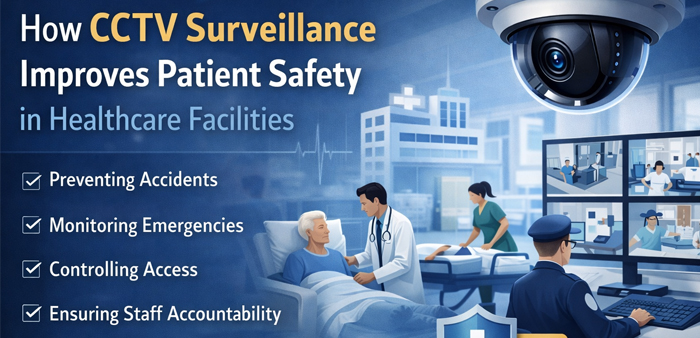
How CCTV Surveillance Improves Patient Safety in Healthcare Facilities
 Posted on January 21, 2026
Patient safety is the foundation of quality healthcare. Hospitals, clinics, nursing homes, and diagnostic centres deal with vulnerable individuals who require constant care, privacy, and protection. While trained medical staff and strict protocols play a vital role, technology especially CCTV surveillance has become a powerful tool to enhance patient safety.
Today, healthcare facilities across India, particularly in metro cities like Delhi, are increasingly investing in advanced CCTV camera systems to create a safer, more accountable, and more efficient care environment. From preventing medical negligence to controlling unauthorized access, CCTV surveillance supports both patients and healthcare professionals.
In this blog, we explore how CCTV surveillance improves patient safety in healthcare facilities, its benefits, best practices, and why professional CCTV camera installation is essential.
The Growing Importance of Patient Safety in Healthcare
Healthcare environments are complex and high-risk. A single error, security lapse, or miscommunication can lead to serious consequences for patients and institutions alike. Common challenges include:
- Patient falls and accidents
- Medication errors
- Unauthorized entry into sensitive areas
- Theft of medical equipment or personal belongings
- Violence or aggression toward staff and patients
- False claims and disputes
To address these challenges, hospitals are combining human supervision with smart surveillance solutions, making CCTV an integral part of modern healthcare infrastructure.
What Is CCTV Surveillance in Healthcare?
CCTV (Closed-Circuit Television) surveillance involves strategically placed cameras that monitor and record activities within hospital premises. These cameras can be installed in:
- Entry and exit points
- Reception areas
- Corridors and hallways
- ICUs and general wards (without violating privacy)
- Emergency rooms
- Pharmacies and storage areas
- Parking zones
With advancements such as HD cameras, night vision, motion detection, and remote monitoring, CCTV systems now offer real-time visibility and actionable insights.
Key Ways CCTV Surveillance Improves Patient Safety
1. Preventing Patient Falls and Accidents
Patient falls are one of the most common safety concerns in hospitals, especially among elderly patients and those with mobility issues.
How CCTV helps:
- Enables staff to monitor patient movement in hallways and common areas
- Helps identify risky behaviour, such as patients trying to walk unaided
- Allows quicker response during emergencies
Reviewing CCTV footage also helps hospitals analyse fall incidents and improve safety protocols.
2. Enhancing Monitoring Without Intrusion
While direct supervision is important, it’s not always possible for staff to be physically present everywhere.
CCTV provides:
- Continuous monitoring without disturbing patients
- Visual support for nurses and attendants
- Coverage during night shifts when staffing may be limited
Modern systems ensure monitoring is ethical and privacy-compliant, focusing on safety rather than intrusion.
3. Improving Emergency Response Time
In emergencies, every second counts. CCTV surveillance helps healthcare teams respond faster by:
- Instantly identifying the location of an incident
- Monitoring overcrowding in emergency rooms
- Alerting staff to unusual activity or distress
With remote access, supervisors can guide on-ground teams more efficiently, reducing response delays.
4. Preventing Unauthorized Access and Trespassing
Hospitals have sensitive zones such as ICUs, neonatal units, operation theatres, and medicine stores. Unauthorized access can put patients at serious risk.
CCTV camera installation at entry points ensures:
- Only authorized personnel enter restricted areas
- Visitors follow hospital rules
- Reduced risk of infections and security breaches
In cities like Delhi, where hospitals face heavy footfall, CCTV camera Delhi solutions play a critical role in access control.
5. Reducing Violence and Misconduct
Unfortunately, incidents of aggression against doctors, nurses, and hospital staff are rising. CCTV surveillance acts as:
- A strong deterrent against violent behaviour
- Evidence in case of disputes or legal issues
- A tool to ensure respectful conduct by staff and visitors
When people know they are being monitored, they are more likely to behave responsibly.
6. Preventing Theft and Loss of Medical Equipment
Medical devices and pharmaceuticals are valuable assets. CCTV helps in:
- Monitoring storage rooms and pharmacies
- Preventing internal and external theft
- Tracking movement of equipment
This not only protects assets but ensures critical equipment is always available for patient care.
7. Supporting Quality Control and Staff Accountability
CCTV surveillance helps healthcare management maintain high standards by:
- Monitoring adherence to hygiene protocols
- Ensuring proper patient handling
- Reviewing procedures for training and improvement
This leads to better service quality and fewer medical errors, directly benefiting patients.
8. Protecting Vulnerable Patients
Children, elderly patients, and individuals with mental health conditions need extra care and protection.
CCTV surveillance:
- Prevents abuse or neglect
- Ensures caregivers follow safety protocols
- Offers reassurance to families
For long-term care facilities and nursing homes, CCTV is especially valuable in maintaining trust.
The Role of Professional CCTV Camera Installation
Installing CCTV in healthcare facilities is not just about placing cameras - it requires expert planning and execution.
A professional CCTV camera installation service ensures:
- Proper camera placement without violating patient privacy
- Coverage of critical areas with minimal blind spots
- Integration with existing IT and security systems
- Compliance with healthcare regulations and data protection laws
In metro areas, many hospitals rely on trusted CCTV camera Delhi service providers who understand local regulations and infrastructure challenges.
CCTV Surveillance and Patient Privacy: Striking the Right Balance
While safety is crucial, patient privacy is equally important. Ethical CCTV usage involves:
- Avoiding cameras in private areas like bathrooms
- Using signage to inform visitors and staff about surveillance
- Restricting access to recorded footage
- Encrypting data and following IT security protocols
When implemented correctly, CCTV surveillance enhances safety without compromising dignity.
Why Healthcare Facilities in Delhi Are Adopting CCTV Rapidly
Delhi’s healthcare sector is expanding rapidly, with rising patient volumes and increased security needs. Hospitals choose CCTV camera Delhi solutions because they offer:
- Scalable systems for small clinics to large hospitals
- Advanced technology with remote access
- Reliable after-sales support and maintenance
With increasing regulatory focus on patient safety, CCTV has become more of a necessity than a luxury.
Future of CCTV in Healthcare
The future of CCTV surveillance in healthcare includes:
- AI-powered behaviour detection
- Facial recognition for access control
- Integration with hospital management systems
- Predictive analytics for safety risks
These advancements will further strengthen patient safety and operational efficiency.
Conclusion
CCTV surveillance has transformed the way healthcare facilities ensure patient safety. From preventing accidents and violence to improving emergency response and accountability, CCTV systems play a critical role in creating a secure and trustworthy healthcare environment.
For hospitals and clinics, investing in professional CCTV camera installation is not just about security - it’s about protecting lives, building trust, and delivering better care. With reliable CCTV camera Delhi solutions, healthcare providers can meet modern safety standards while maintaining patient privacy and dignity.
In an era where safety and accountability matter more than ever, CCTV surveillance is a smart, future-ready investment for healthcare facilities.
Frequently Asked Questions (FAQ)
1. Is CCTV allowed in hospitals and healthcare facilities?
Yes, CCTV is allowed in hospitals as long as it complies with privacy laws and ethical guidelines. Cameras should not be installed in private areas such as restrooms or changing rooms.
2. How does CCTV improve patient safety?
CCTV improves patient safety by preventing falls, monitoring emergencies, controlling unauthorized access, reducing violence, and ensuring staff accountability.
3. Can CCTV footage be used as legal evidence?
Yes, CCTV footage can be used as evidence in disputes, investigations, or legal cases, provided it is recorded and stored lawfully.
4. What areas should have CCTV cameras in a hospital?
Common areas include entrances, corridors, reception, emergency rooms, pharmacies, parking areas, and restricted zones—while respecting patient privacy.
5. Why choose professional CCTV camera installation?
Professional installation ensures proper camera placement, compliance with healthcare regulations, reliable performance, and long-term system efficiency.
6. Are CCTV camera Delhi services suitable for small clinics?
Yes, many CCTV camera Delhi providers offer scalable solutions suitable for small clinics, diagnostic centers, and large hospitals alike.

Home | Recent Posts
- Troubleshooting Common CCTV Camera Issues: How a Professional Repair Service Can Help
- Surveillance and Security Devices in Delhi, Gurgaon, and Noida
- How to Choose the Right CCTV Camera installation for Your Property?
- 10 Reasons Why CCTV Camera Installation is Essential for Your Business
- Cctv Camera Installation Service for Delivery Centers
- Benefits of CCTV camera installation in School
- Importance of CCTV Cameras in Real Estate
- How do You Protect Your Home or Property?
- 5 Best Security CCTV Camera Installation Tips
- Top 10 Best CCTV Camera Brands in India 2020
- Do You Realize why CCTV Camera is so Important?
- Saving Money On cctv Camera Installation With DIY
- Importance of CCTV Cameras in Schools
